Rhode Island’s Cesspool Phase-out Act: What Property Owners Actually Need to Know
If you own a Rhode Island property with a cesspool, you’ve probably heard some version of “you’ll have to replace that eventually.” This is the actual law behind that — what triggers it, what doesn’t, and what the process looks like when it applies to you.
The Short Version Everyone’s Heard
Most Rhode Island homeowners who’ve asked around about their cesspool have picked up some version of the same fragment: “you have to replace it if you sell.” That’s true, but it’s only one of four separate triggers written into the law, and it’s not even the one that gets enforced first in most cases. A lot of people assume they’re safe just because they’re not planning to sell anytime soon — and then find out that isn’t actually the relevant question.
The law in question is the Rhode Island Cesspool Act of 2007, amended in 2015. It’s aimed specifically at cesspools — not septic systems generally — because cesspools are a fundamentally different, and fundamentally cruder, way of handling wastewater. A cesspool is essentially a buried pit that both holds and disperses sewage with no real treatment step in between, which is why the state banned installing new ones back in 1968 and has spent the years since trying to phase out the ones already in the ground.
What Actually Triggers a Required Upgrade
There isn’t one single deadline that applies to every cesspool in the state. Instead, the law lays out four separate situations, and any one of them on its own is enough to trigger a required replacement.
A Sale or Transfer of the Property
This is the trigger most people have heard about, and it’s the one that comes up most often in practice. Since January 1, 2016, any cesspool serving a property that’s sold or transferred has to be removed from service within one year of the closing date. It doesn’t matter whether the cesspool is working perfectly fine at the time of sale — the transfer itself is what starts the clock. In real estate terms, that usually means the cost of the upgrade becomes part of the negotiation, whether that’s a price adjustment, a credit at closing, or the seller handling it before the deal closes.
A Cesspool That’s Failed
If a cesspool fails — backing up, surfacing effluent, or otherwise no longer containing wastewater the way it’s supposed to — it has to be replaced within one year of the failure, and sooner if RIDEM determines there’s an imminent threat to public health. This is a separate trigger from the sale-related one, so a failure can require action years before you’d ever consider selling.
Commercial and Multifamily Properties
A cesspool serving a multifamily dwelling, or a non-residential facility with meaningful daily occupancy, falls under a different standard than a single-family home and generally has to be replaced under current DEM and EPA requirements regardless of a sale. If you own a small apartment building or a commercial property on a cesspool, it’s worth confirming your specific status rather than assuming the point-of-sale rule is the only one that applies to you.
The Three 200-Foot Protection Zones
Cesspools located within 200 feet of a tidal shoreline feature, a public drinking water well, or a reservoir or water body used for a drinking water supply intake were required to be replaced immediately — the deadline for this category was January 1, 2014, which means any cesspool still in one of these zones today is already in violation, not just approaching a future requirement. This is the category the original 2007 law focused on before the 2015 amendment extended a version of the requirement statewide through the point-of-sale trigger. A few municipalities — Charlestown, South Kingstown, and New Shoreham among them — have gone further with their own local ordinances requiring replacement of all cesspools regardless of location, so it’s worth checking whether your town has additional requirements on top of the state law.
Not sure which category your cesspool falls into?
We can tell you where your property actually stands before you’re forced to find out.
Schedule a Site Evaluation
Serving Providence and all of Providence County.
What the Upgrade Process Actually Involves
Confirming What You Actually Have
Not every older system is a cesspool — plenty of pre-1970s properties actually have an early septic tank and field rather than a true cesspool, and the distinction matters because a functioning septic system isn’t subject to this law at all. If your property predates 1968 and you’ve never had the system professionally identified, that’s the first thing worth settling, since it determines whether any of this applies to you in the first place.
Site Evaluation and Design
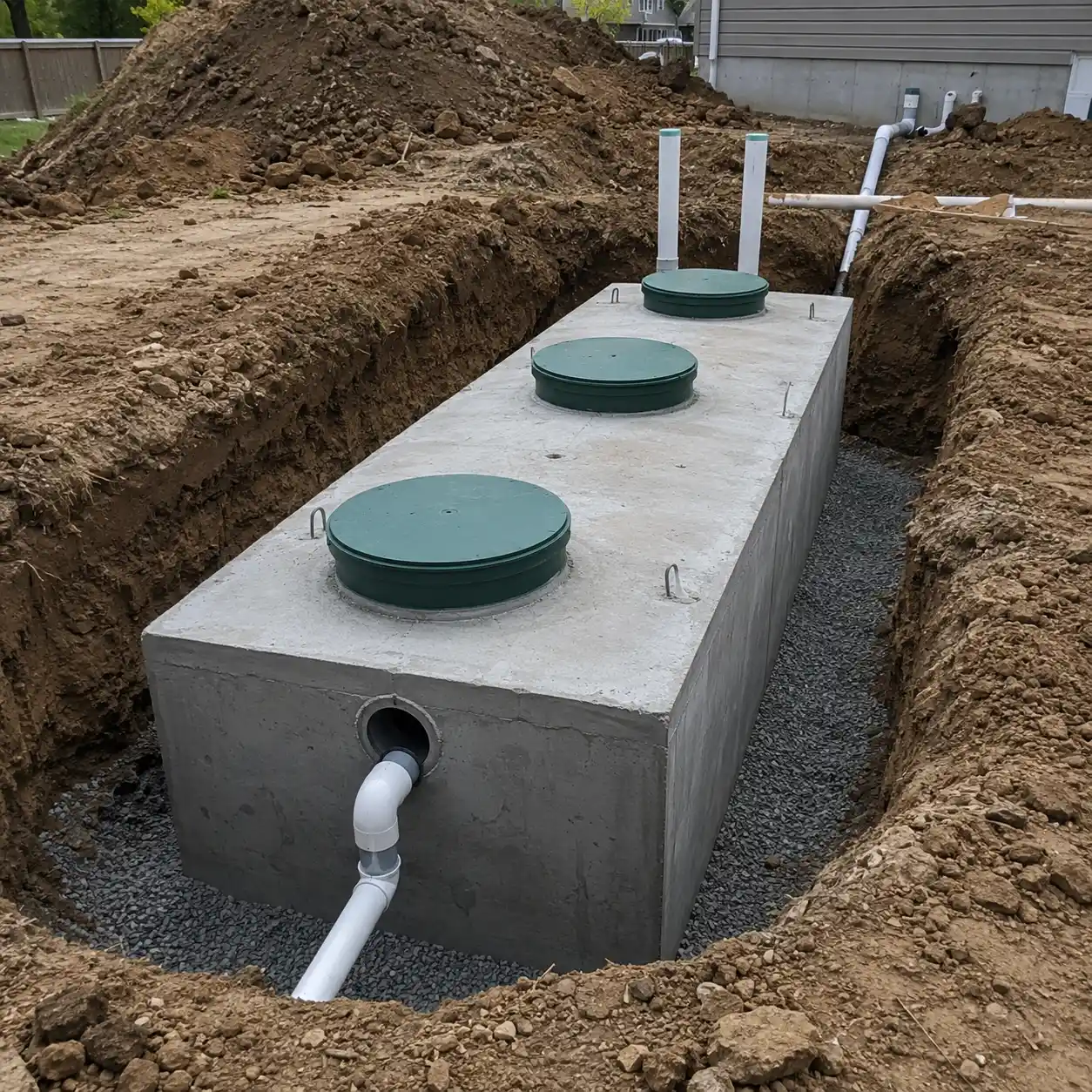
Once an upgrade is confirmed as required, the replacement isn’t a like-for-like swap — it’s a new OWTS designed for the property, which means soil testing, a groundwater check, and a design submitted to RIDEM for approval before any construction starts. This is the same process as any new septic installation, just triggered by a cesspool rather than new construction. Depending on the site — shallow soil, tight lot lines, proximity to a well — the design that comes out of that evaluation might be a conventional field or might require one of the alternative technologies RIDEM permits for more constrained sites.
Cost and Timeline Factors
The one-year window from a closing date sounds like plenty of time, but site evaluation and RIDEM design approval alone can take several weeks before installation even begins, and a site that needs an alternative system adds more time and cost on top of that. If you know a sale is coming, or you’re already past a failure, starting the evaluation early gives you room to actually plan rather than rushing to beat a deadline that’s closer than it looks once permitting is factored in.
If You’re Not Sure Where You Stand
A lot of the anxiety around this law comes from not knowing which category applies, if any. A straightforward site visit settles it — confirming whether what’s in the ground is actually a cesspool, whether it falls within one of the 200-foot zones, and what a compliant replacement would realistically involve for your specific lot.
If you’re gearing up to sell, refinancing, or just tired of not knowing, that’s exactly the kind of visit we do regularly across Providence County.
Find Out If Your Cesspool Needs to Be Upgraded
Fill out the form and tell us a bit about your property — we’ll confirm what you actually have and what, if anything, the law requires for your situation.
- Cesspool vs. septic system confirmation
- 200-foot protection zone check
- Site evaluation & soil testing
- Licensed OWTS design coordination
- RIDEM permitting handled for you
- Serving all of Providence County
Tell Us About Your Needs
We’ll reach out to confirm your appointment details.