Septic Tank Pumping in Providence, RI
Regular pumping is the single biggest thing you can do to protect your system’s lifespan. We locate the tank, pump both chambers, check the baffles and walls while it’s open, and tell you when to expect us back — most visits are done in under an hour.
RIDEM-Compliant Disposal
Serving All of Providence County
Schedule a Pumping
What Pumping Actually Does
Inside the tank, solids settle to the bottom as sludge and grease floats to the top as scum. Only the clearer liquid layer in the middle is supposed to leave the tank and head to the drain field. Pumping removes both the sludge and the scum, resetting the tank so it can keep doing that separation job correctly.
Skip it long enough and those layers build up until there’s no room left for separation to happen — solids start washing out with the liquid and heading straight for the field, where they clog the soil in ways that are far more expensive to fix than a pump-out ever would be. It’s the cheapest insurance your system has.
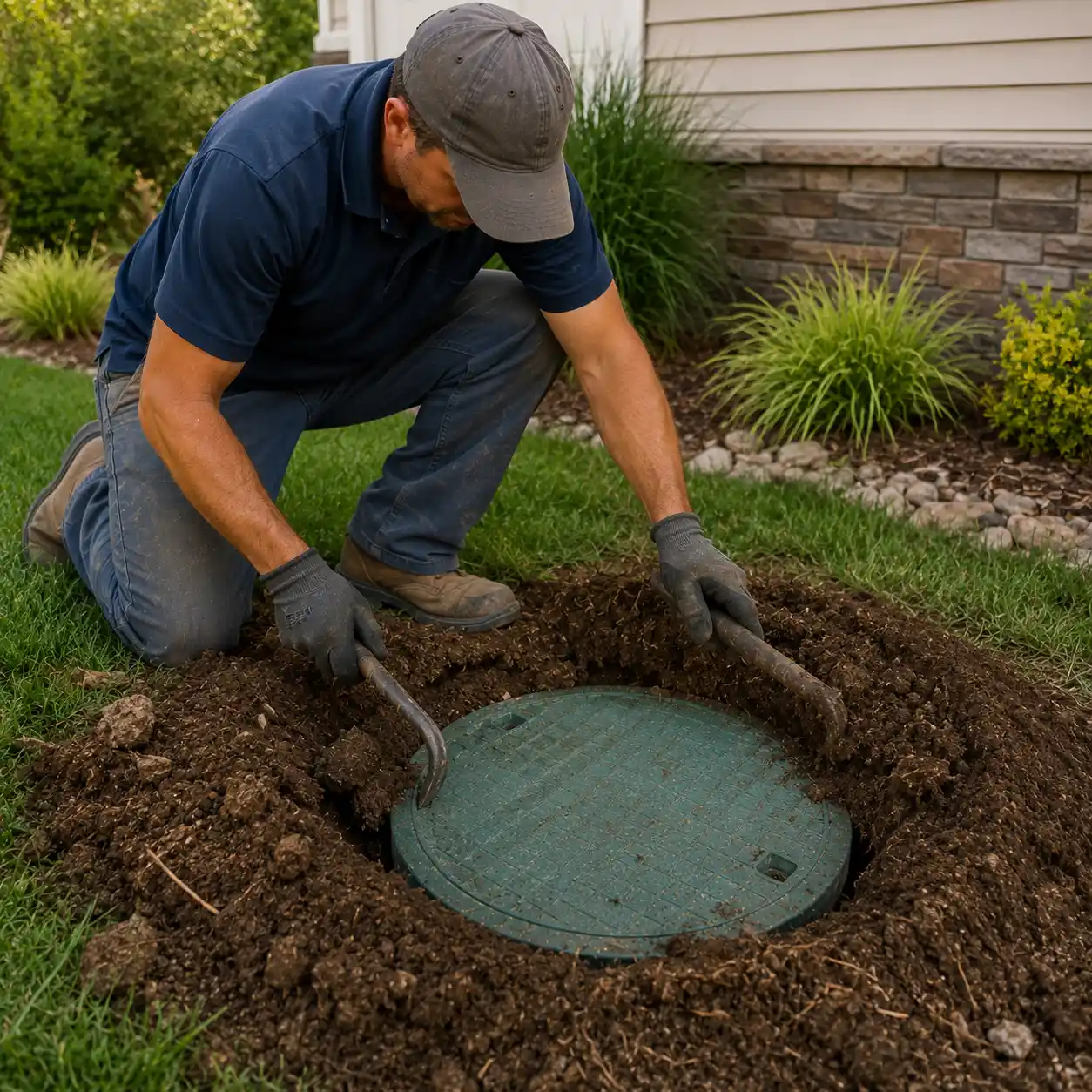
A fair number of Providence County properties, especially older housing stock, have tanks that were installed decades ago with no maintenance record at all. If a system’s changed hands a few times, “when was it last pumped” is often a genuine unknown — and mature landscaping over the years can make even finding the lid its own small project. We handle that as part of the visit, not as a separate charge.
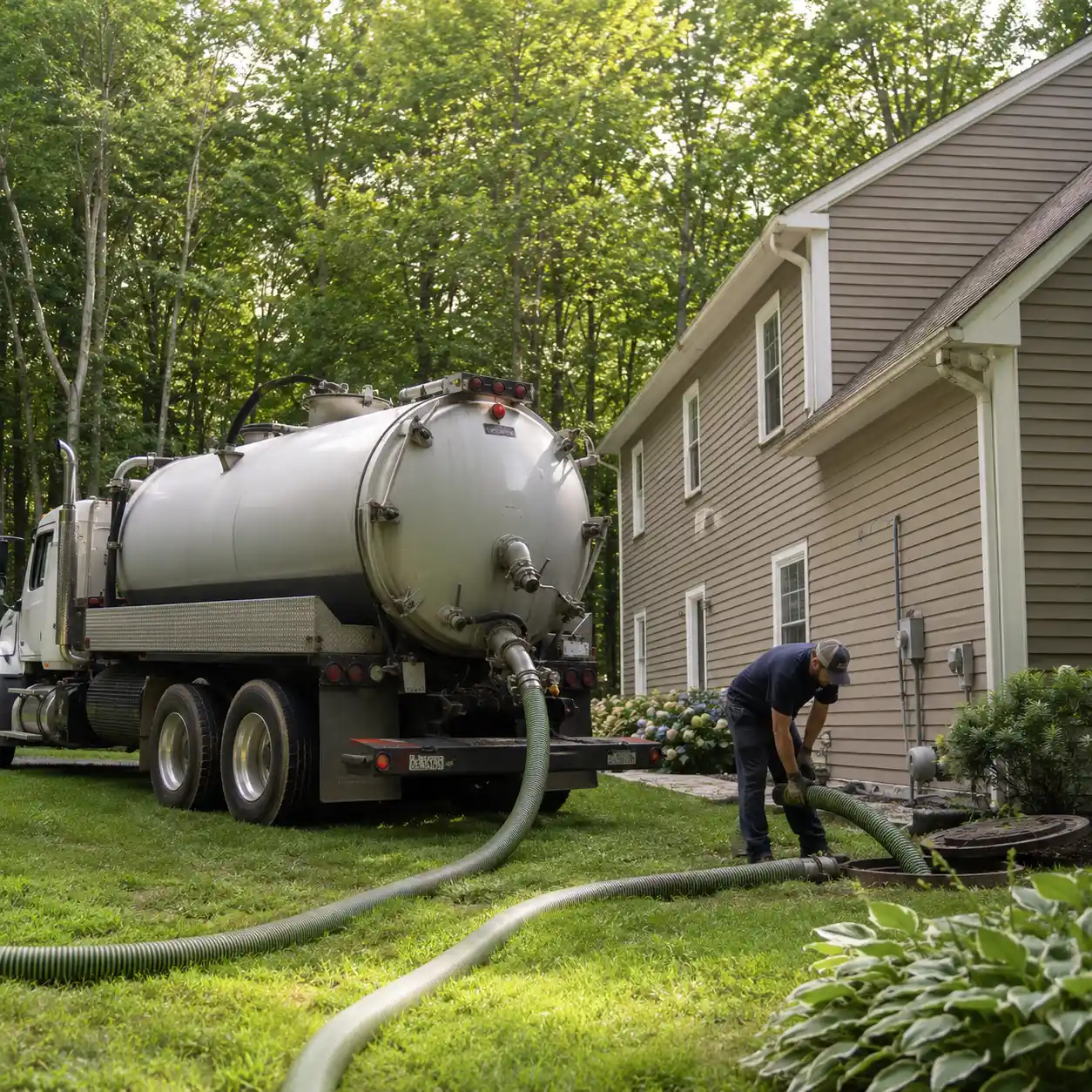
What a Pumping Visit Actually Involves
A straightforward visit, start to finish.
Signs It’s Time for a Pump-Out
A lot of pumping visits happen on a normal maintenance schedule — no drama involved. But these are the situations worth acting on sooner rather than later:
- You genuinely don’t know when — or if — the tank has ever been pumped
- It’s been more than five years since your last pumping
- You’ve added a bathroom, a household member, or a long-term guest recently
- Drains are running slower than usual, even without a full backup
- You’re closing on a home purchase and there’s no pumping record available
- An effluent pump alarm (if your system has one) has gone off
None of these mean something’s wrong yet — they just mean it’s a reasonable time to check.
How a Pumping Visit Goes
Locate & Access
Finding the tank and uncovering the lid, typically 15 to 30 minutes depending on how it was last buried.
Pump Both Chambers
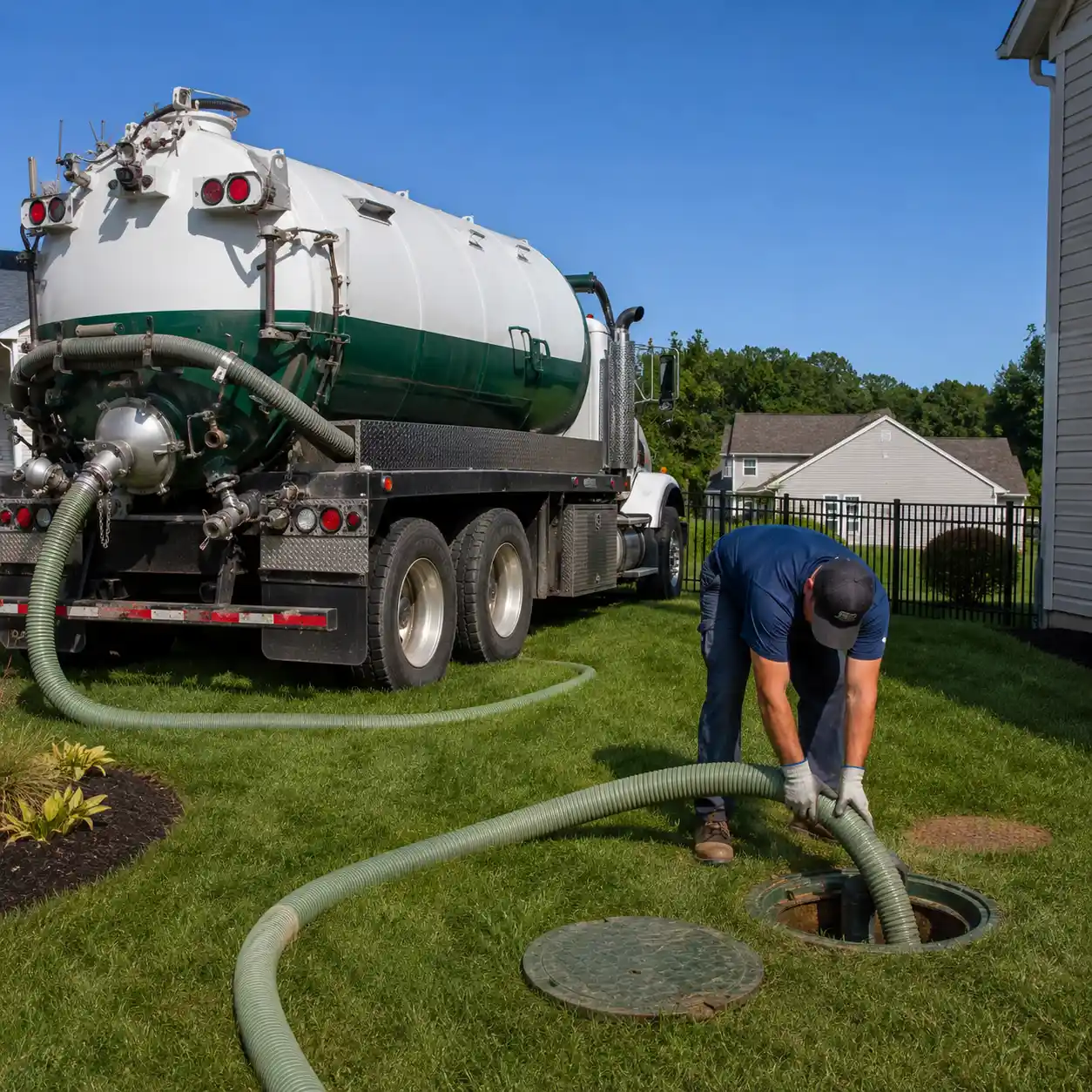
The actual pump-out, usually 20 to 30 minutes for a standard residential tank.
Visual Check
A quick look at the baffles and tank walls while everything’s open and accessible, about 10 minutes.
Backfill & Report
Restoring the site and giving you a straightforward rundown of what we saw, plus a realistic estimate for your next pumping.
How Often Should You Pump?
General guidance based on household size and tank size — your actual sludge and scum levels are always the more reliable indicator.
This table is general guidance, not a diagnosis. We measure your tank’s actual sludge and scum levels at every visit and base our recommendation on that.
Commercial & Multi-Property Pumping
Office buildings, small multi-unit residential properties, and other commercial sites on private septic tend to need pumping more often than a single-family home, simply because more people are using the system day to day.
Property managers overseeing several Providence County properties on private systems are one of the more common calls we get. We can set up a recurring schedule across a whole portfolio so you’re not tracking separate pumping dates for each address individually.
For restaurants and food service specifically, grease trap maintenance is a separate, more frequent service — we handle that too, and can coordinate both on the same visit where it makes sense.
Septic Pumping Questions
Not necessarily, as long as we have access to the tank area and a way to reach you if we run into something unexpected. Plenty of customers leave a gate unlocked or mark the tank location and head to work. If you’d rather be there, that’s fine too.
Yes, this comes up often, especially on older properties or homes that have changed hands a few times. We locate the tank as part of the visit using probing and, where available, any records on file with the town or RIDEM.
We’re careful about where we position the truck and hose, and a standard pumping visit doesn’t involve heavy equipment driving over your lawn. If access is tight or the tank’s in an unusual spot, we’ll talk through it with you before we start rather than improvising.
If you know where the lid is, clearing any furniture, planters, or debris on top of it helps speed things along. Beyond that, there’s not much to do — we handle the rest.
Yes, and we’re used to coordinating scheduling with property managers or landlords rather than the tenant directly, if that’s easier. Just let tenants know ahead of time that the water may need to sit unused for a short window during the visit.
Systems with a pump chamber — common with mound or pressure-dosed setups — need that chamber checked along with the main tank. We test the pump and alarm function while we’re there, since a failed alarm defeats the point of having one.
Pumping Service Across Providence County
We run regular pumping routes throughout Providence County, which keeps scheduling predictable no matter which town you’re in.
Not sure if you’re in our coverage area? Send your address along with your request and we’ll confirm.
- Providence, Cranston, and Pawtucket
- Woonsocket, Cumberland, and Lincoln
- Smithfield, North Smithfield, and Johnston
- Scituate, Foster, Glocester, and Burrillville
Other Septic Services We Offer
Septic Inspections
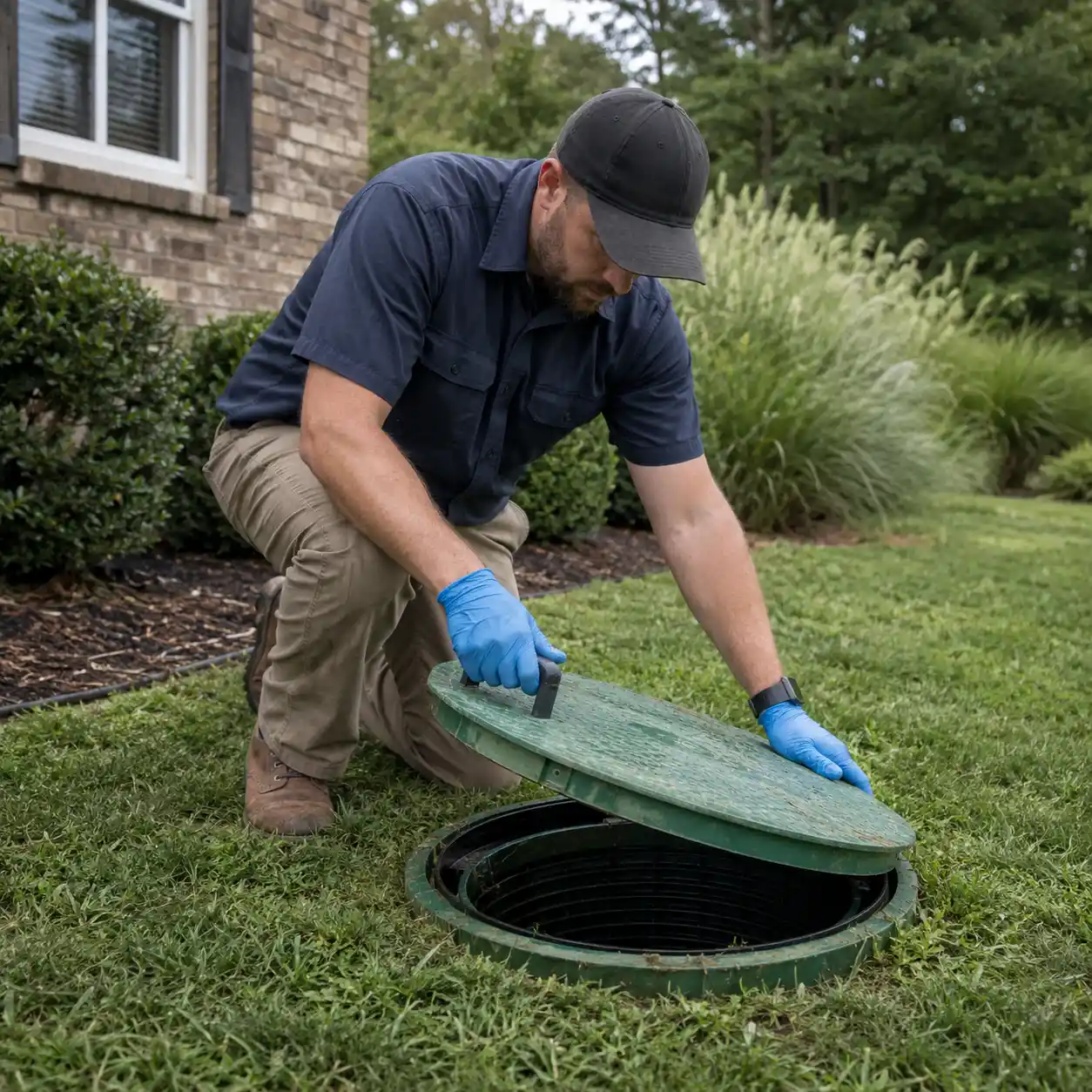
Buying, selling, or just curious about your system’s condition — a full written report tells you where things actually stand.
Septic Cleaning
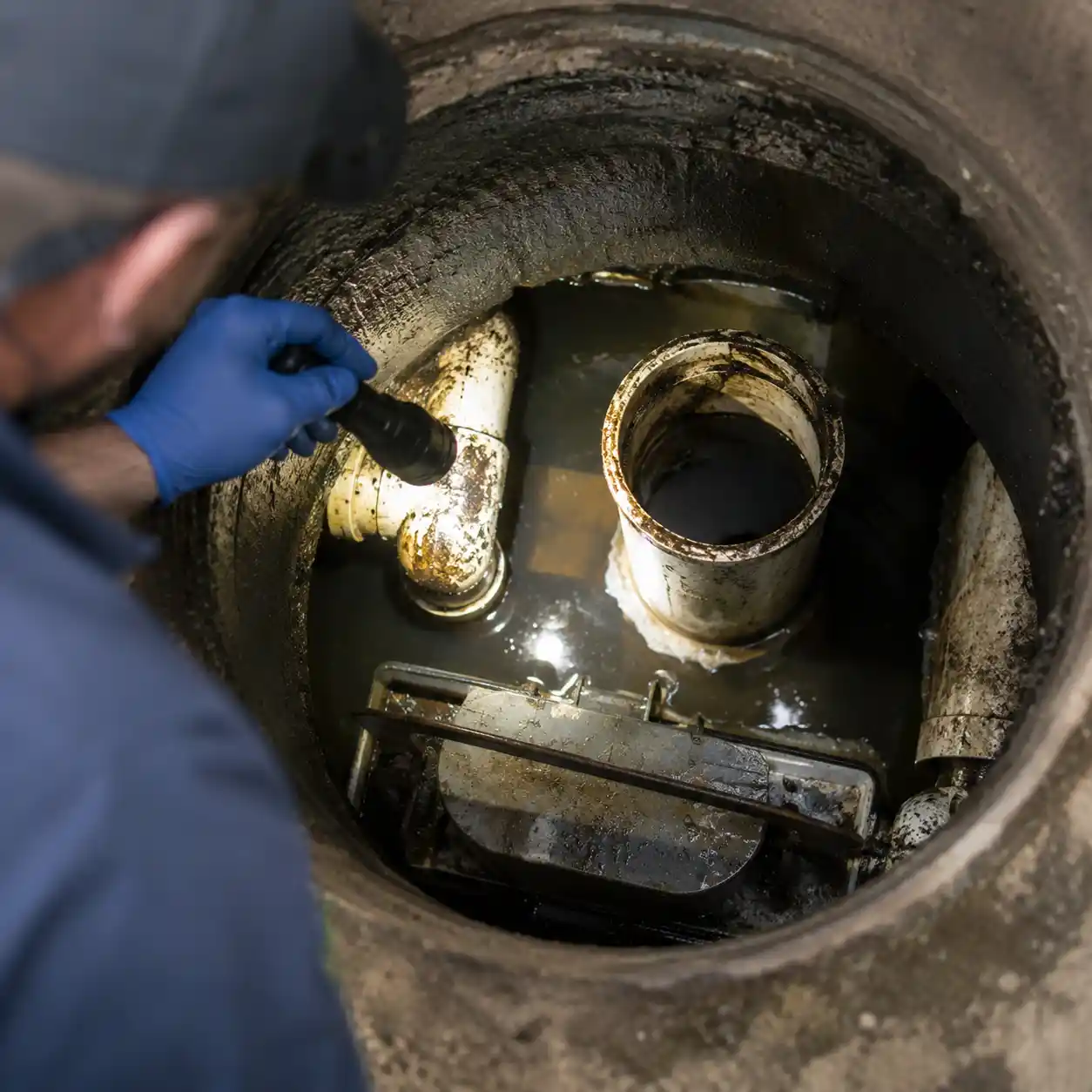
For tanks with heavy buildup on the walls or baffles that a standard pump-out won’t fully clear.
Drain Field Services
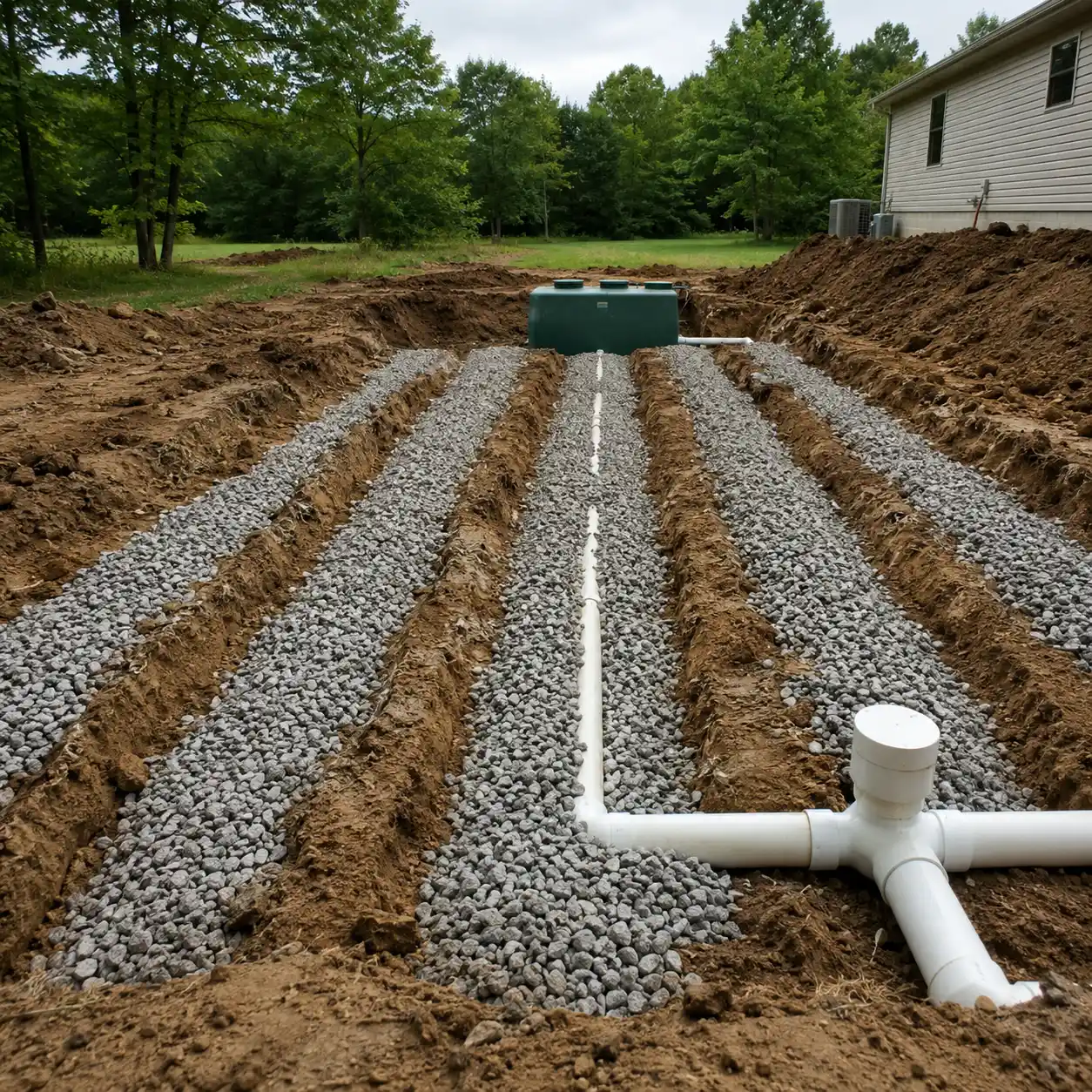
If pumping alone doesn’t resolve a slow-draining system, we diagnose the field before recommending anything further.
Schedule a Pumping in Providence County
Fill out the form and we’ll get you on the schedule — usually within a few days for routine pumping.
- Tank location included, no extra charge
- Full pump-out of both chambers
- Baffle and tank wall check
- Sludge & scum level documentation
- RIDEM-compliant disposal
- Serving all of Providence County
Tell Us About Your Needs
We’ll reach out to confirm your appointment details.