Grease Trap Cleaning in Providence, RI
We service grease traps for restaurants and food service properties throughout Providence County — from Federal Hill’s dense strip of Italian restaurants to standalone kitchens further out in the county. Regular cleaning keeps your plumbing running and your paperwork ready for the next health inspection.
Scheduled Maintenance Plans
Serving All of Providence County
Schedule Grease Trap Service
What a Grease Trap Actually Does
Fats, oils, and grease — FOG, in plumbing code terms — cool and solidify quickly once they leave a hot kitchen sink. A grease trap intercepts them before they reach your plumbing lines, letting cooler wastewater pass through while the grease itself stays behind for removal. Without that interception, FOG travels downstream and hardens inside the pipe.
A trap that isn’t cleaned on schedule eventually loses its capacity to hold anything back, and grease starts passing through into the plumbing system anyway — narrowing pipes over time and eventually causing a full blockage. On a property with private septic specifically, that grease doesn’t stop at the pipe; it can foul the tank and the drain field too, turning a kitchen maintenance issue into a much bigger yard problem.
Providence has one of the densest concentrations of independent restaurants in New England, and Federal Hill in particular is about as concentrated as it gets. A lot of those buildings are old, with kitchens that have grown busier and more ambitious over the years without the grease trap being resized to keep pace — which is a big part of why undersized traps come up so often when we’re called out there.
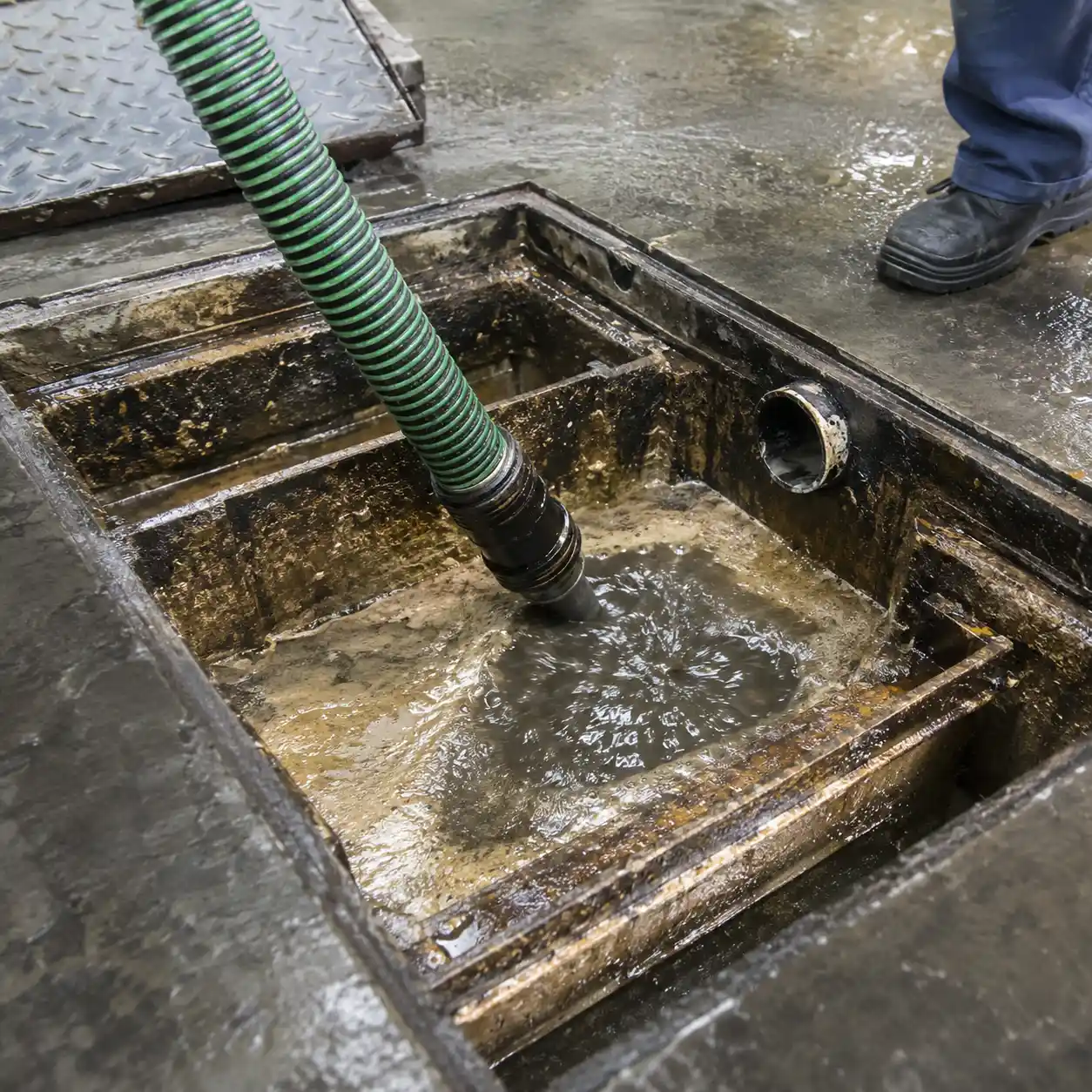
What a Grease Trap Service Visit Involves
Fast, thorough, and scheduled around your kitchen — not the other way around.
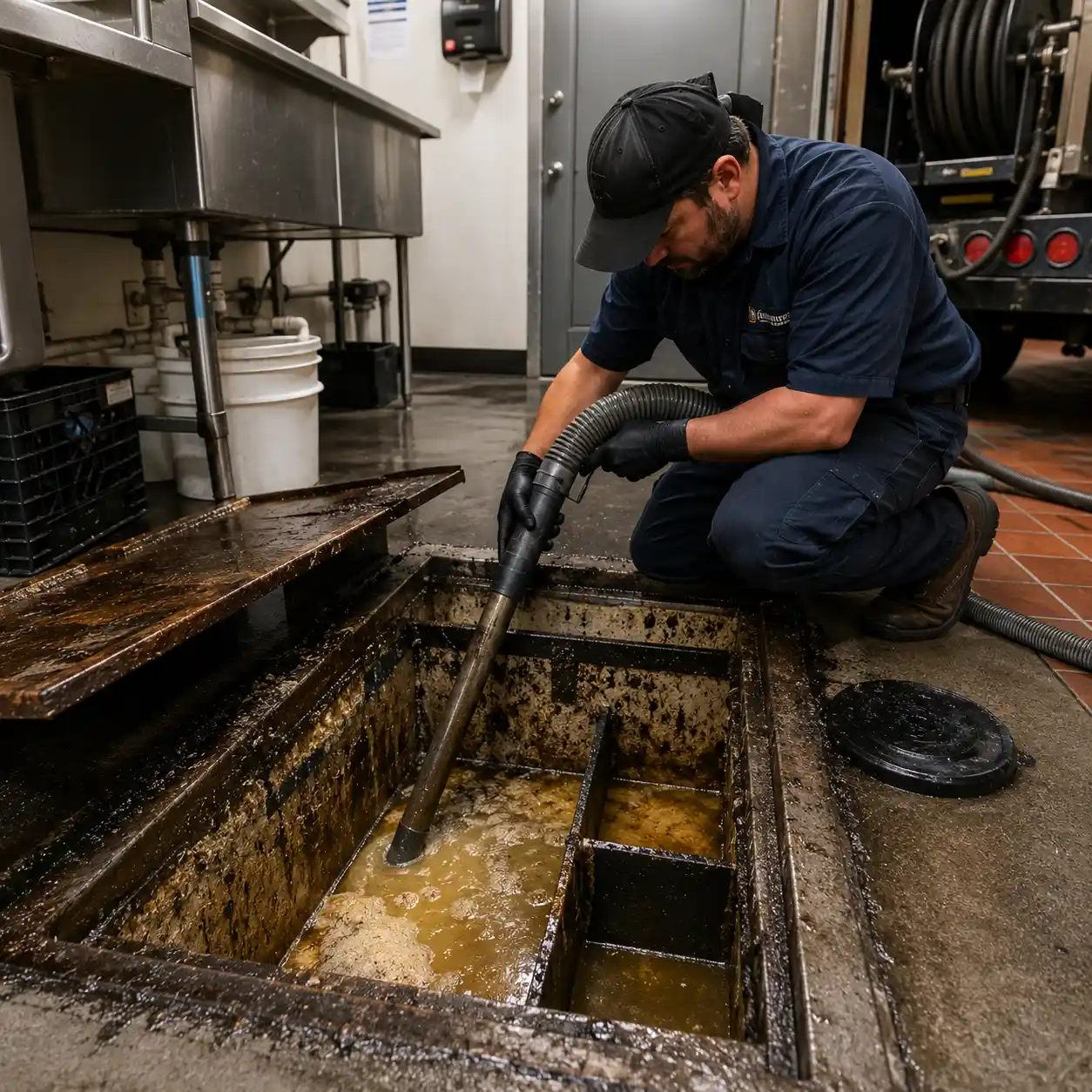
Signs Your Grease Trap Needs Service
A trap that’s falling behind usually gives some warning before it becomes a full shutdown situation:
- Kitchen sinks or floor drains draining slower than usual
- A grease or sewage odor near the trap or dish pit
- The trap needs emptying more often than your current schedule allows for
- A health inspector has flagged your maintenance records or trap condition
- Kitchen volume or menu has grown since the trap was last sized
- Grease visibly present in floor drains after normal service
Any one of these is worth addressing before it turns into a mid-shift plumbing emergency.
How a Service Visit Goes
Schedule Around Your Hours
We work with your service hours — before open, after close, or during a slow window, whatever disrupts the kitchen least.
Drain-Down & Extraction
Removing wastewater and accumulated FOG, typically 20 to 40 minutes depending on trap size and condition.
Clean & Inspect Components
Scraping residue and checking screens and baffles for damage, roughly 15 minutes.
Documentation & Next Date
You get a dated service record and a realistic recommendation for your next cleaning based on your actual kitchen volume.
How Often Should Your Trap Be Cleaned?
General guidance based on kitchen type — your actual volume is always the better indicator.
General guidance only — an undersized trap or a menu change can shift your actual needs. We’ll recommend a specific schedule based on what we see at your first visit.
Restaurant Groups & Multi-Location Properties
If you operate more than one location — a few spots along Federal Hill, or restaurants spread across a couple of Providence County towns — we can put every location on a single coordinated schedule instead of managing separate vendors or timelines for each address.
Documentation gets consolidated too, which makes life easier when a health inspection or franchise compliance review covers multiple properties at once.
We also handle septic tank pumping and inspections for group-owned properties that run on private systems rather than municipal sewer, so it’s often one point of contact for everything wastewater-related.
Grease Trap Service Questions
Yes — early morning, late night, or a slow window between meal services all work. We schedule around your kitchen’s actual operation rather than asking you to close for it.
Collected FOG is hauled to an approved facility for proper disposal or recycling, not just dumped somewhere convenient. That’s part of what a licensed hauler is actually responsible for.
Trap sizing depends on your kitchen’s flow rate and how much grease-heavy cooking you’re doing — fryers and high-volume sautéing put more demand on a trap than a limited menu does. If you’re cleaning constantly and still having problems, undersizing is worth investigating, and we can help you figure out whether that’s the issue.
It’s possible in some kitchens depending on trap location, but we generally recommend scheduling around active service to avoid working around staff and equipment mid-shift. We’ll figure out what makes sense for your specific layout.
Call us and describe the situation — an active overflow during service is the kind of thing we prioritize. It’s also a strong sign your current cleaning interval needs to be shortened going forward.
Regularly. Older restaurant buildings often have traps installed in tight, awkward spots that weren’t planned with easy access in mind. We’re used to working in those conditions and can usually service them without any disruption to the rest of the kitchen.
Grease Trap Service Across Providence County
We service restaurants and food service properties throughout Providence County — Federal Hill and the rest of the city, plus kitchens further out in Cranston, Pawtucket, and beyond.
Not sure if your location is in our coverage area? Send the address along with your request and we’ll confirm.
- Providence, Cranston, and Pawtucket
- Woonsocket, Cumberland, and Lincoln
- Smithfield, North Smithfield, and Johnston
- Scituate, Foster, Glocester, and Burrillville
Other Services We Offer
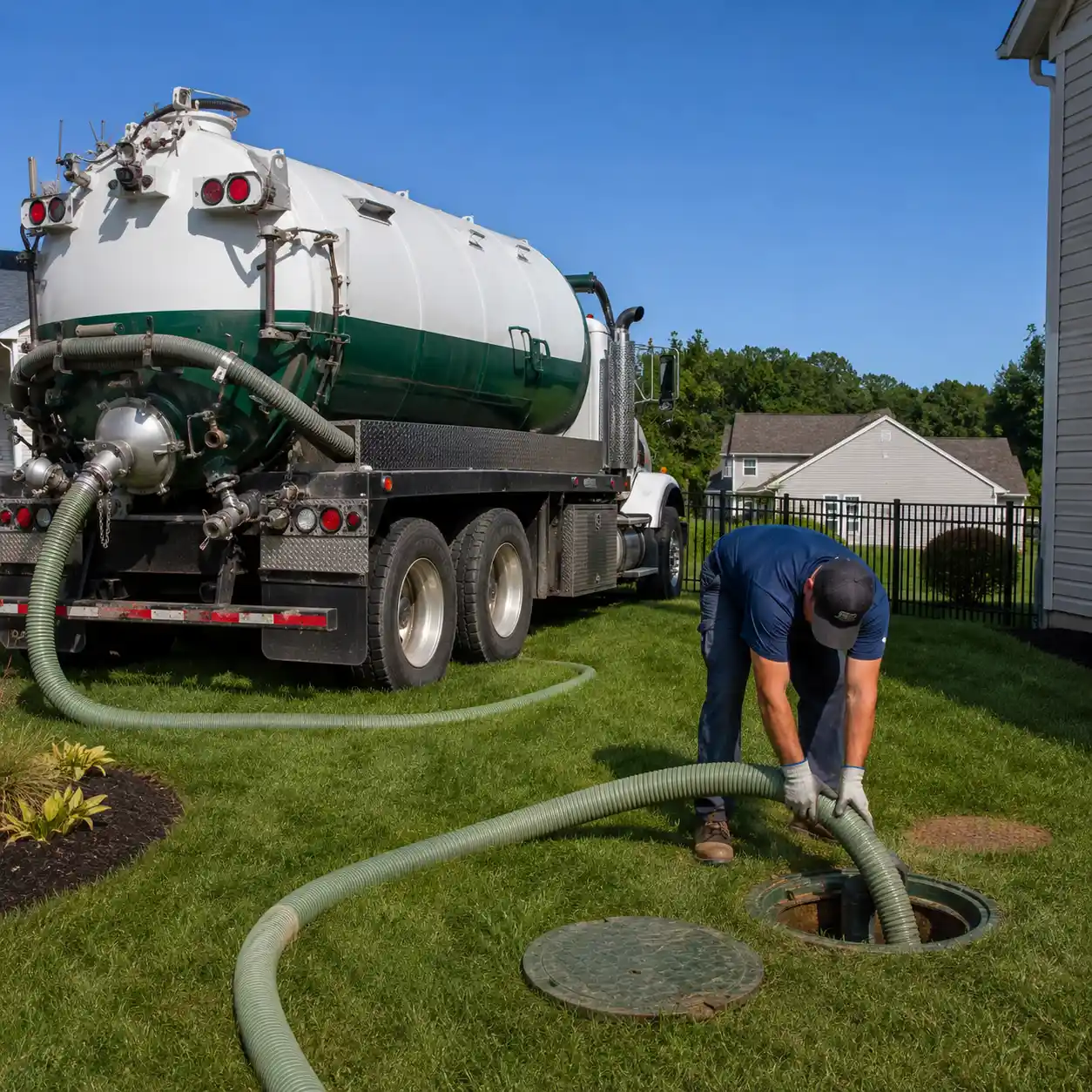
Septic Tank Pumping
For properties on private septic, we handle tank pumping alongside grease trap service so nothing falls through the cracks.
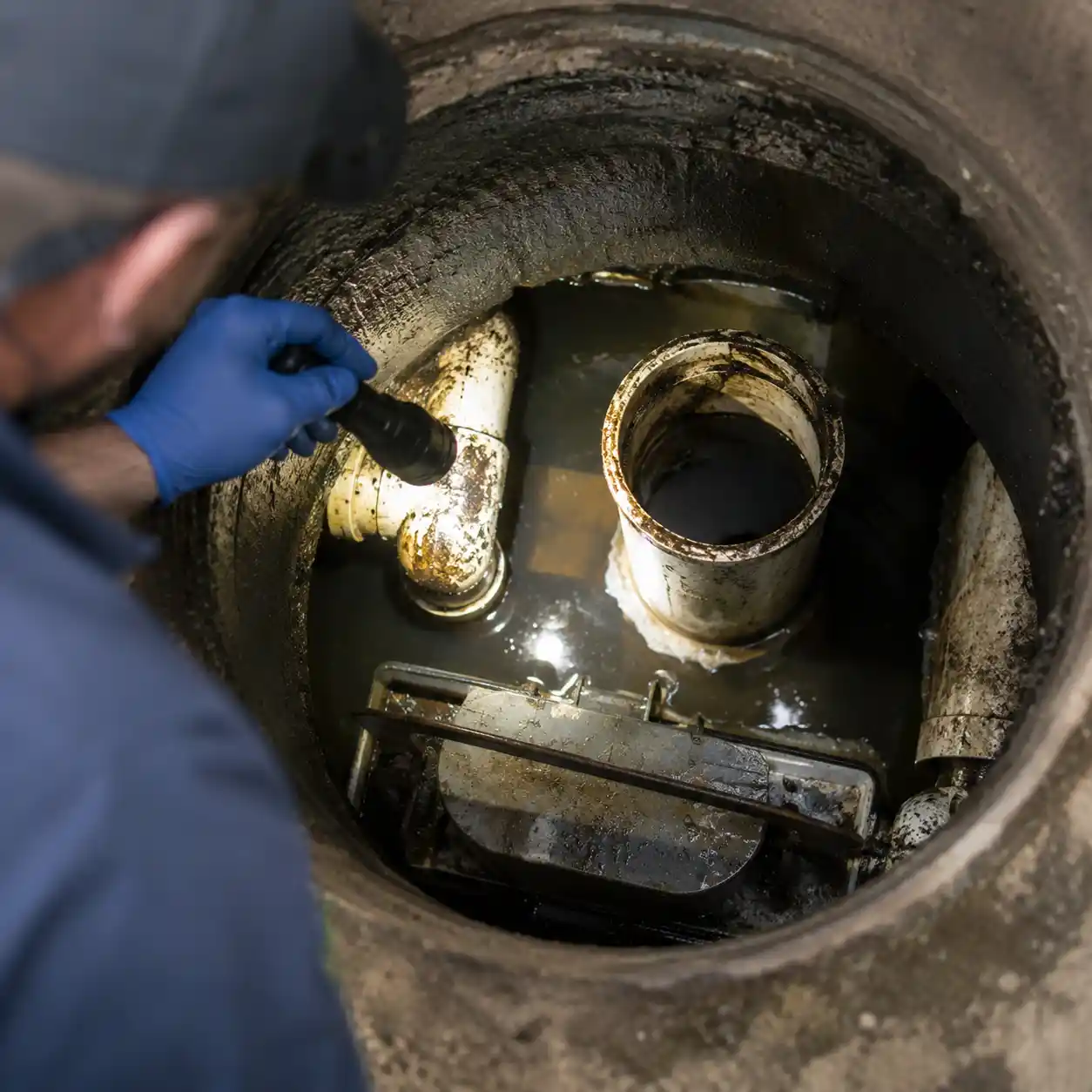
Septic Inspections
Buying or leasing a restaurant space on private septic? We can evaluate the whole system before you sign.
Septic Cleaning
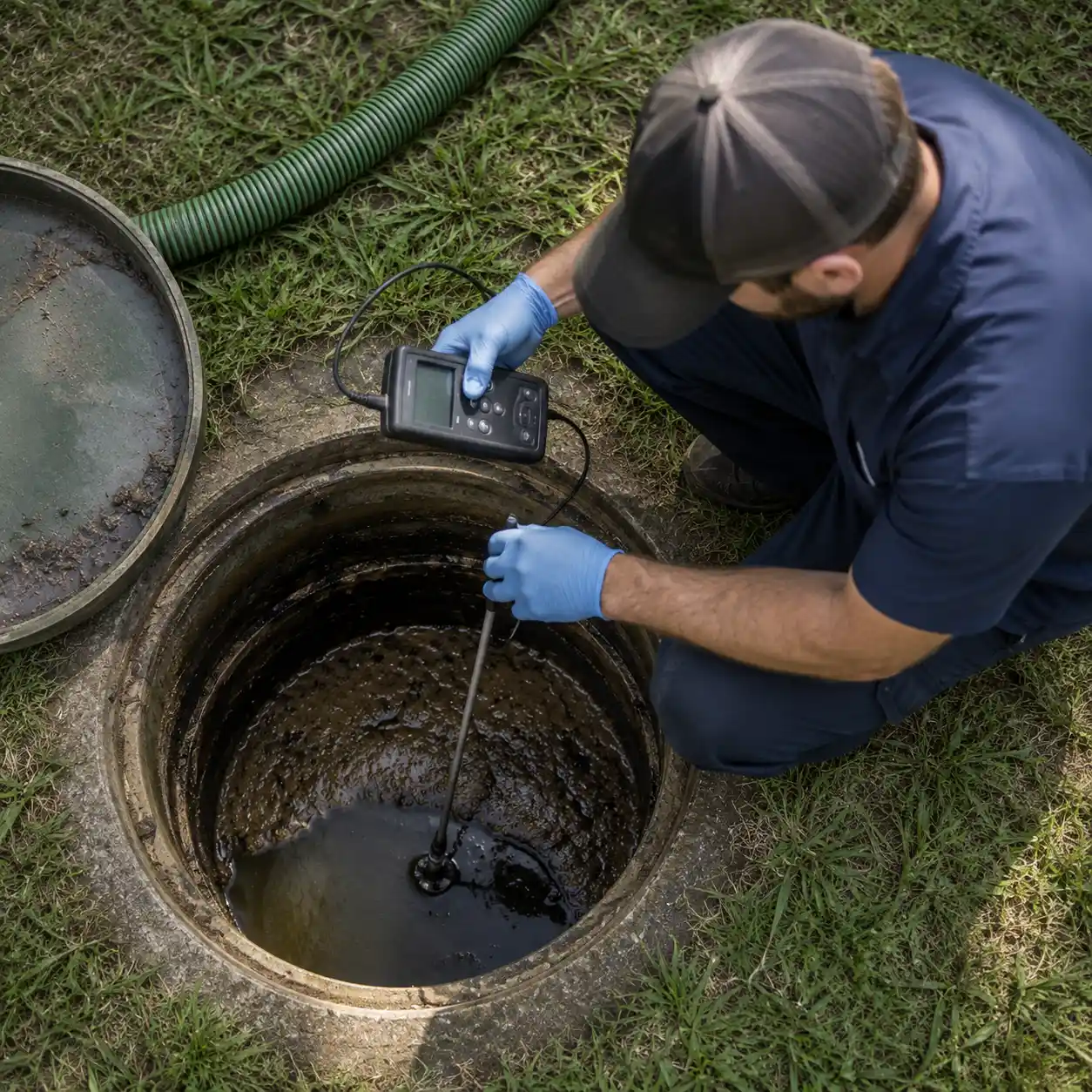
If grease has already made it past the trap and into the tank, a full cleaning may be needed to fully clear it.
Schedule Grease Trap Service in Providence County
Fill out the form with your kitchen’s details and preferred timing — we’ll build a schedule around your operation, not the other way around.
- Flexible scheduling around service hours
- Full FOG removal & interior scraping
- Screen & baffle inspection
- Documentation for health inspections
- Recurring maintenance plans available
- Serving all of Providence County
Tell Us About Your Needs
We’ll reach out to confirm your appointment details.