Grease Trap Compliance for Providence Restaurant Owners: What the Code Actually Requires
Having a grease trap and having a compliant one aren’t the same thing. Here’s what Rhode Island’s plumbing code — and the health inspector checking against it — actually looks at.
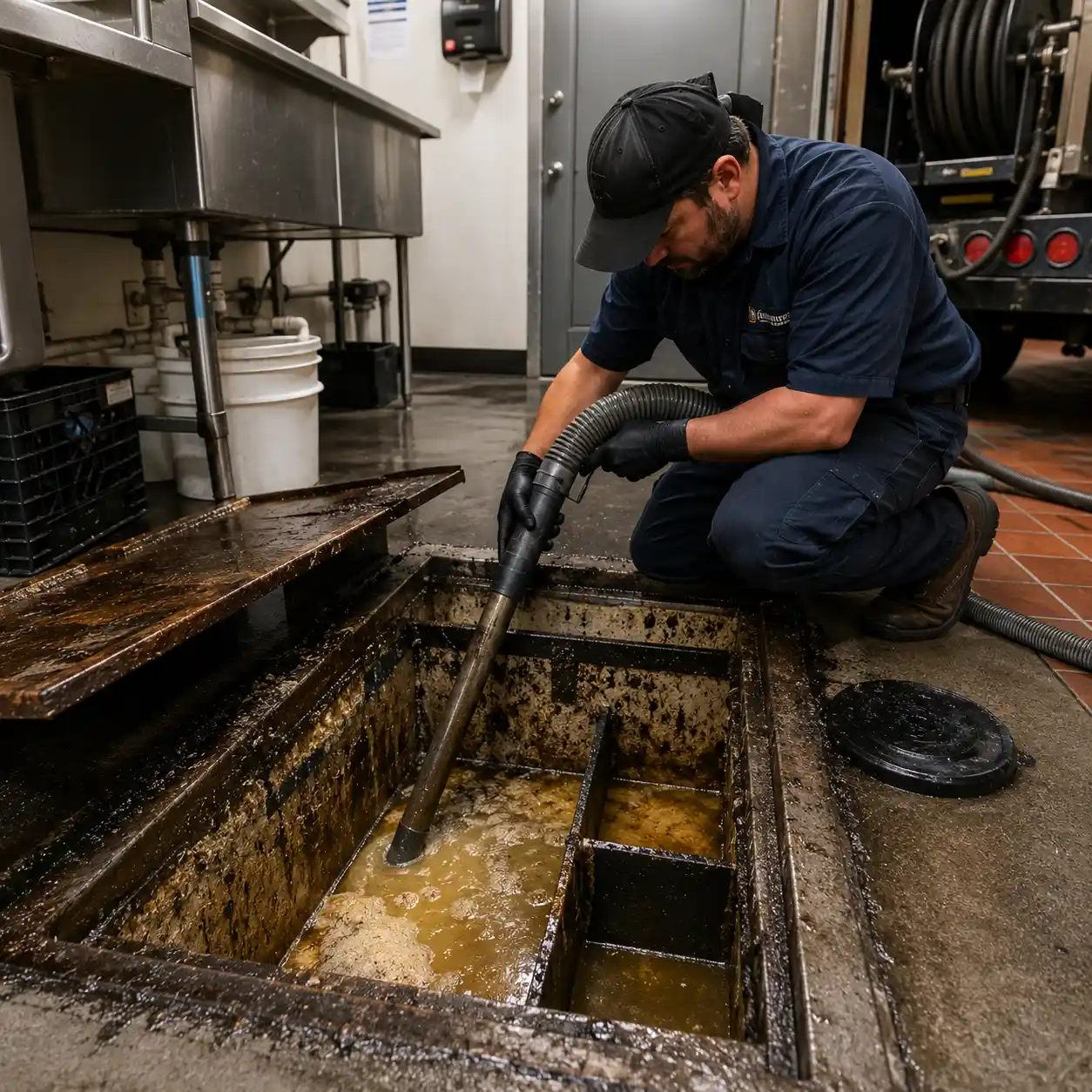
“We Have a Trap — Isn’t That Enough?”
Having some kind of grease interceptor installed is the baseline, not the whole requirement. Rhode Island’s plumbing code — which governs this regardless of whether your building is on municipal sewer or private septic — gets specific about which fixtures need to run through it, how it needs to be sized, and how accessible it has to stay for servicing. A trap that technically exists but doesn’t meet those specifics is still a compliance problem waiting to surface, usually at the worst possible moment.
Here’s what actually gets checked, in roughly the order it tends to come up.
1. Whether an Interceptor Is Required for Your Fixtures at All
The code requires an interceptor for any fixture or piece of equipment that produces grease-laden waste in a food prep area — pot sinks, pre-rinse sinks, soup kettles, wok stations, floor drains that kettles drain into, automatic hood wash units, and dishwashers without a pre-rinse sink in front of them. Not every fixture in a kitchen needs to run through the trap, but the ones that handle actual grease-heavy waste do, and it’s worth confirming your setup actually routes the right fixtures through it rather than assuming it does.
2. Whether the Trap Is Actually Sized for Your Kitchen
Sizing is based on anticipated flow and conditions of use, not a one-size-fits-all standard. A trap that was correctly sized for a kitchen’s original menu can become undersized after a renovation, an added fryer station, or a genuine increase in covers — and an undersized trap fails to do its job no matter how often it’s cleaned. If you’re cleaning constantly and still having problems, sizing is worth investigating before you assume the cleaning schedule is the issue.
3. Whether It’s Actually Accessible for Servicing
The code requires ready access for inspection and maintenance. In older restaurant buildings especially — and Providence has plenty of those — traps sometimes get installed in genuinely awkward spots, buried under equipment or behind built-in shelving added years later. An inaccessible trap doesn’t get cleaned properly even when someone’s trying, which is its own compliance problem separate from sizing or fixture routing.
Not sure if your trap actually meets code?
We can check sizing, access, and fixture routing on the same visit.
Schedule Grease Trap Service
Serving Providence and all of Providence County.
4. Whether Flow Into the Trap Is Properly Controlled
Interceptors are required to have a device controlling the rate of water flow so it doesn’t exceed the trap’s rated capacity — flooding a trap with water faster than it’s designed to handle defeats the separation process the trap exists for. This is more of an installation-level detail than something you’d check day to day, but it’s part of what an inspector or a service technician is evaluating when assessing whether a trap is functioning as designed, not just present.
5. Whether You Have Cleaning Records on File
Local health inspectors generally want to see documentation showing the trap’s been serviced on a regular schedule, not just visual confirmation that it looks clean today. A dated service record from every cleaning is what actually satisfies that — if you can’t produce a history when asked, that’s treated as a gap even if the trap itself is currently in good shape.
6. What Happens If Something’s Out of Compliance
Beyond the health inspection itself, grease that bypasses an undersized or poorly maintained trap and blocks a sanitary sewer line is a real problem with real consequences — for a property on municipal sewer, discharging grease into the public system can violate federal clean water regulations, and for a property on private septic, that same grease fouls the tank and field. Either way, the fixes tend to be far more expensive than staying ahead of a proper cleaning and sizing schedule in the first place.
If You’re Not Sure Where You Stand
Most compliance gaps we find aren’t dramatic — an undersized trap, a fixture that was never properly routed, a missing service record. All of them are straightforward to fix once identified. A single visit is usually enough to tell you exactly where your kitchen actually stands.
Get Your Grease Trap Compliance Checked
Fill out the form and tell us about your kitchen — we’ll check sizing, access, and fixture routing, and leave you with documentation you can actually use.
- Sizing & fixture routing check
- Full FOG removal & interior scraping
- Access & flow control assessment
- Documentation for health inspections
- Recurring maintenance plans available
- Serving all of Providence County
Tell Us About Your Needs
We’ll reach out to confirm your appointment details.