Drain Field Repair in Providence, RI
When a leach field stops absorbing wastewater the way it should, the fix isn’t automatically a full replacement. We start by figuring out what’s actually happening underground — a saturated trench, a cracked distribution box, a line that’s collapsed under years of soil weight — and repair whatever that turns out to be. Most of the drain field calls we take in Providence County get resolved without digging up the whole field.
RIDEM-Compliant Work
Serving All of Providence County
Schedule a Drain Field Evaluation
How a Drain Field Actually Fails — and Why Repair Is Often Enough
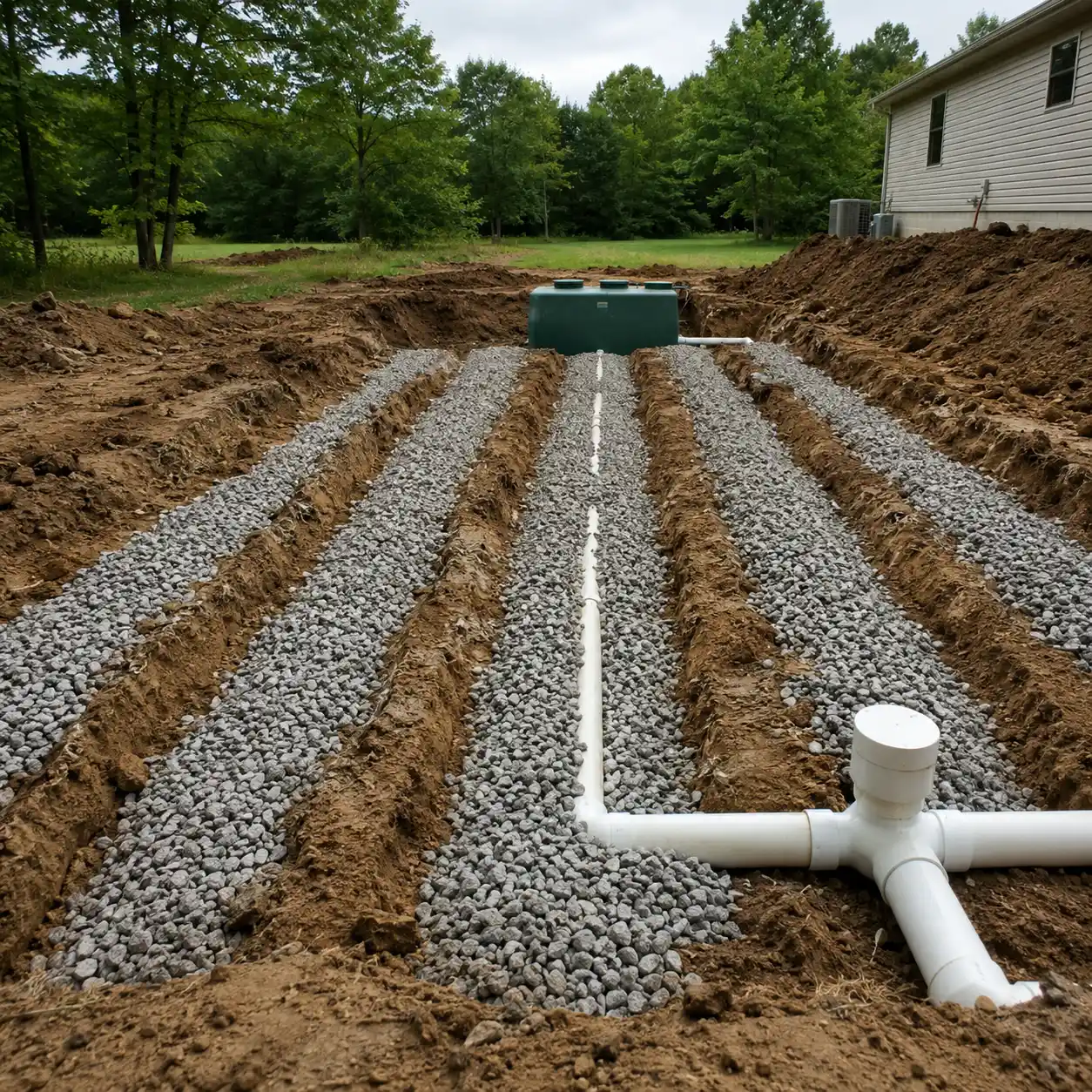
A drain field’s whole job is to let treated effluent from the septic tank seep through unsaturated soil before it reaches groundwater. That soil does real filtering work — it’s not just a place for water to disappear. Rhode Island’s OWTS rules set a required vertical separation between the bottom of the trenches and the seasonal high water table specifically because that column of soil is doing the treatment. When something interrupts that process — a blocked line, a saturated trench, a damaged distribution box sending all the flow to one side of the field instead of spreading it evenly — the field stops working the way it was designed to.
Left alone, that interruption gets worse. Effluent that can’t disperse backs up toward the tank, surfaces in the yard, or both. A distribution box problem that would’ve taken an afternoon to fix can turn into biomat buildup across an entire trench line if it goes unnoticed for a season or two. The earlier the actual cause gets identified, the more of the field is still salvageable.
Providence County gives us a wide range of conditions to work with. Out toward Scituate, Foster, Glocester, and Burrillville, shallow ledge is common enough that trench depth and field placement are genuinely constrained by the bedrock, not just by preference. Closer to the bay, rising groundwater has been compressing the usable separation distance on some older systems — which is part of why a field that worked fine for twenty years can start showing stress without anything in the household changing. We factor both of those realities into how we diagnose a failing field here, not just whether the tank needs pumping.
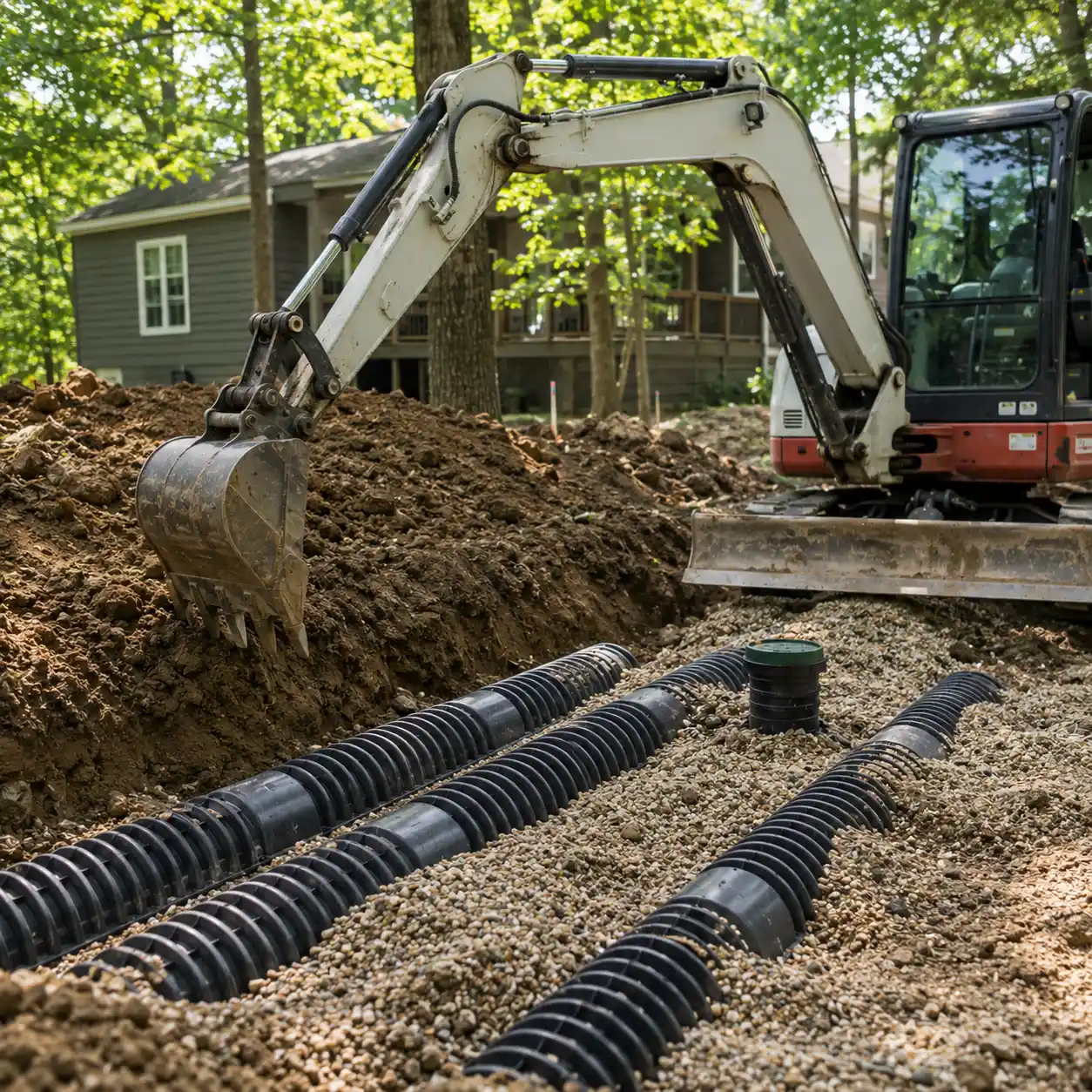
What a Drain Field Repair Visit Actually Involves
A step-by-step look at how we diagnose and fix a failing field, rather than defaulting to a full replacement quote.
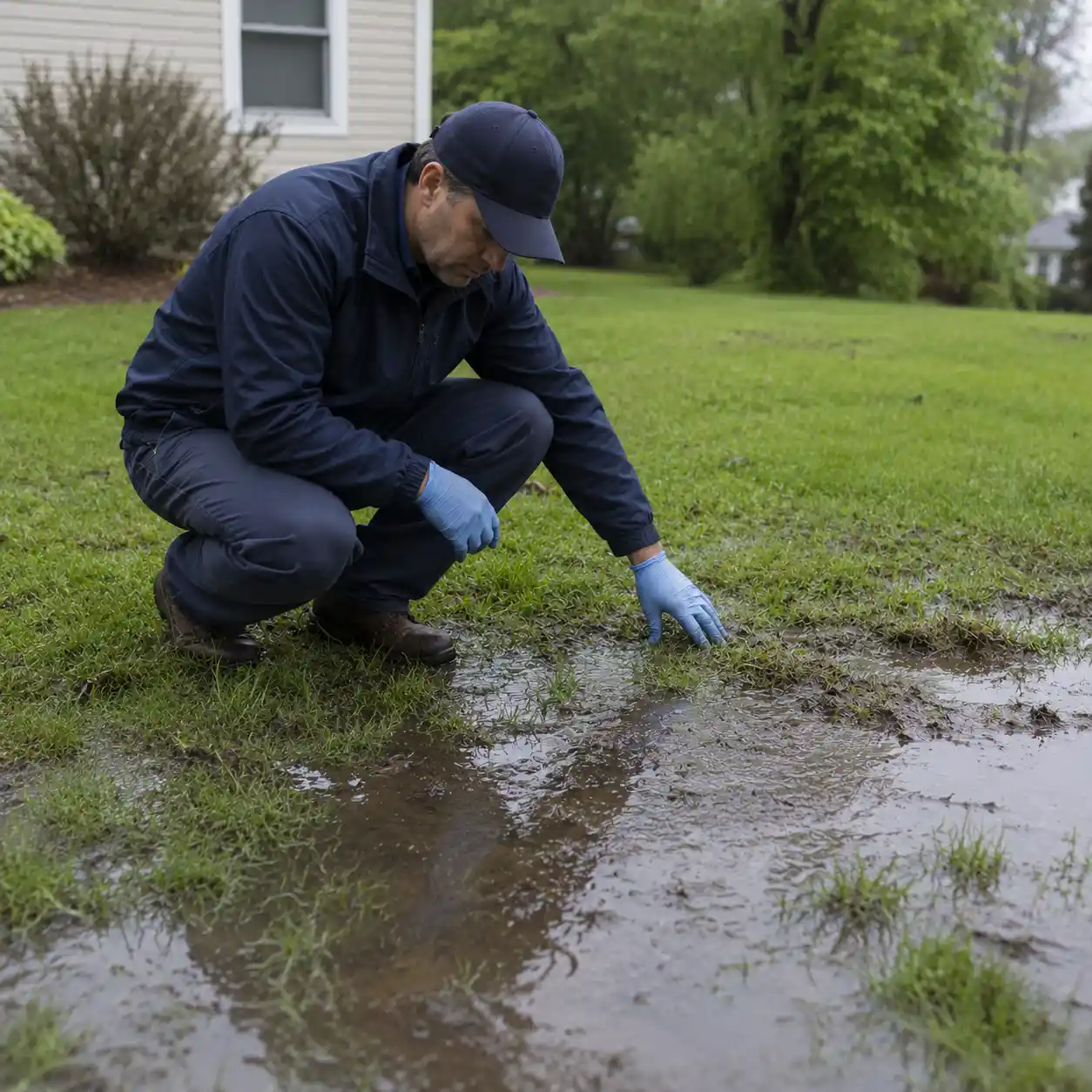
Signs Your Drain Field Needs Attention
Drain field problems rarely show up out of nowhere. There’s usually a stretch of weeks or months where the signs are there but easy to write off as something else. Here’s what’s actually worth a call:
- Standing water or soggy ground over the field, especially when it hasn’t rained recently
- A patch of grass over the field that’s noticeably greener or growing faster than the rest of the yard
- A sewage or sulfur odor outside near the tank or field area
- Slow drains throughout the house — not just one sink or tub
- Gurgling sounds from toilets or drains when other fixtures are in use
- Sewage backing up into the lowest drain in the house
- A notice from RIDEM or your town’s wastewater office flagging the system
Any one of these on its own is worth a look. A field caught at the first sign of stress has real repair options; one that’s been ignored through several of these signs usually has fewer.
How a Drain Field Repair Visit Goes
Initial Assessment
We locate the tank and field, pump the tank if it’s due so we can see the system’s actual baseline condition, and pull any RIDEM records on file for the property. Usually an hour or two.
Diagnostic Digging
We open test pits at the points most likely to show us what’s happening — often a half day, depending on the field’s size and how many trenches need checking.
Repair or Remediation
A distribution box swap or a damaged line repair can often be done the same day. More involved remediation — resting a section of the field, regrading, correcting a design flaw — can run two to three days depending on scope.
Inspection & Sign-Off
Before we leave, we confirm effluent is dispersing the way it should, and we file whatever documentation the repair requires with RIDEM or your town’s wastewater office.
Repair or Replace? A Practical Comparison
Every field is different, but these are the patterns we see most often when deciding between a repair and a full replacement.
This table is a general guide, not a diagnosis. We give you a specific, honest recommendation after we’ve actually seen the field.
Commercial Drain Field Repair
A fair number of small commercial properties in the outlying parts of Providence County — offices, retail buildings, restaurants — run on private OWTS rather than municipal sewer. Commercial flow volumes put more consistent daily load on a field than a typical household does, which means problems tend to surface sooner and repair timing matters more for a business trying to stay open.
For food service properties specifically, a drain field problem is sometimes actually a grease trap problem — fats and oils that bypass an undersized or poorly maintained trap coat the soil in the field and inhibit absorption the same way they’d clog a pipe. If that’s what we find, we’ll tell you, and we handle grease trap service too.
Larger commercial systems in Rhode Island often require sign-off from a licensed OWTS designer for anything beyond a minor repair. We coordinate that process and keep your maintenance records current for any inspection schedule your system is subject to.
Drain Field Repair Questions
It depends on the scope. A distribution box swap or a straightforward line repair often doesn’t require a new design filing. Anything more involved — remediating a saturated section, altering the field’s layout — typically needs a licensed OWTS designer and a repair application to RIDEM. We’ll tell you which category your repair falls into before we start, and we handle the paperwork either way.
Yes, though frozen ground and frost depth affect how we schedule it. Once the frost line sets in, excavation takes longer and sometimes requires thawing the surface first. For anything urgent — active backup, effluent surfacing — we work through it regardless of season. For planned remediation work, we’ll often suggest timing that avoids fighting frozen ground unless there’s a reason to move faster.
For a targeted repair — a distribution box or a section of damaged pipe — we’re typically working in a fairly contained area directly over that component. Field-wide remediation involves more ground disturbance since we need access to multiple trenches. We’ll walk you through the expected footprint before we start digging, not after.
Usually not in the way a modern OWTS can be. Cesspools are essentially unlined pits rather than engineered systems with a tank and a designed field, and Rhode Island’s regulations generally require them to be upgraded to a conforming OWTS rather than repaired in place — especially if the cesspool sits within 200 feet of a coastal shoreline feature, where replacement is required under state law. We can assess what you have and walk you through what an upgrade actually involves.
A same-day fix for something like a distribution box is common. Remediation involving field rest or more significant excavation usually runs two to three days. We give you a specific estimate once we’ve done the test pit evaluation — not before.
For repairs that go through RIDEM’s application process, yes — you’ll typically receive a Certificate of Conformance once the work is verified, and some towns follow up with a routine inspection a few years out. We file the documentation on your behalf so there’s a clear record if you ever sell the property or need to reference the repair later.
Drain Field Repair Across Providence County
Providence itself is largely on municipal sewer, so most of the drain field work we do is out in the county’s less densely sewered communities — the western towns where lot sizes are bigger and private OWTS is still the norm. Scituate, Foster, and Glocester in particular have enough shallow ledge that field design and repair work there is genuinely different from a flat, deep-soil lot.
We also cover Burrillville, Johnston, Smithfield, North Smithfield, and Cumberland. If your property is somewhere in between and you’re not sure whether you’re on sewer or a private system, reach out — we can usually tell you before we even schedule a visit.
- Providence and inner Providence County
- Scituate, Foster, and Glocester
- Burrillville and North Smithfield
- Johnston and Smithfield
- Cumberland and surrounding communities
Other Septic Services We Offer
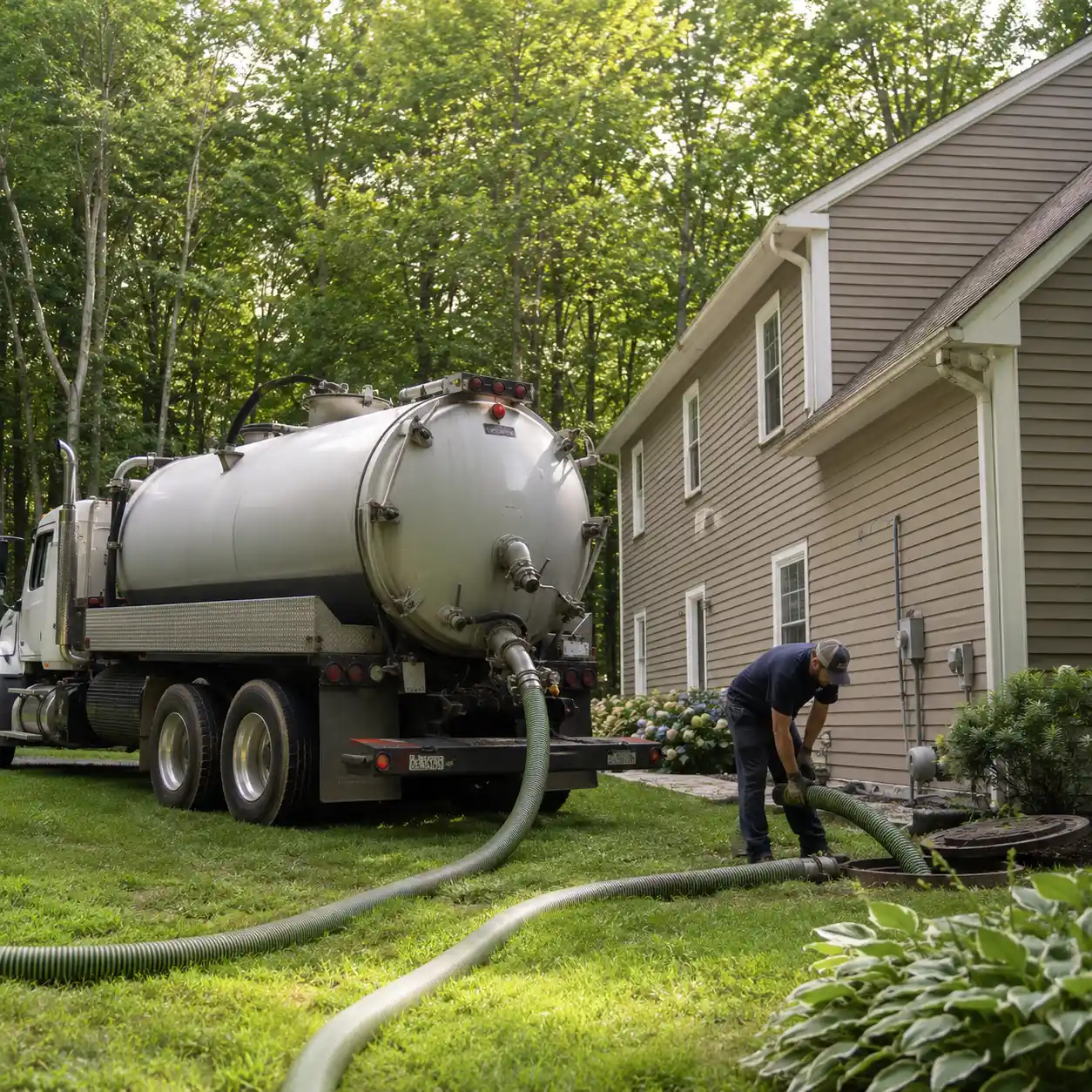
Septic Tank Pumping
An overdue tank is one of the more common hidden causes of drain field stress. Regular pumping keeps solids from ever reaching the field in the first place.
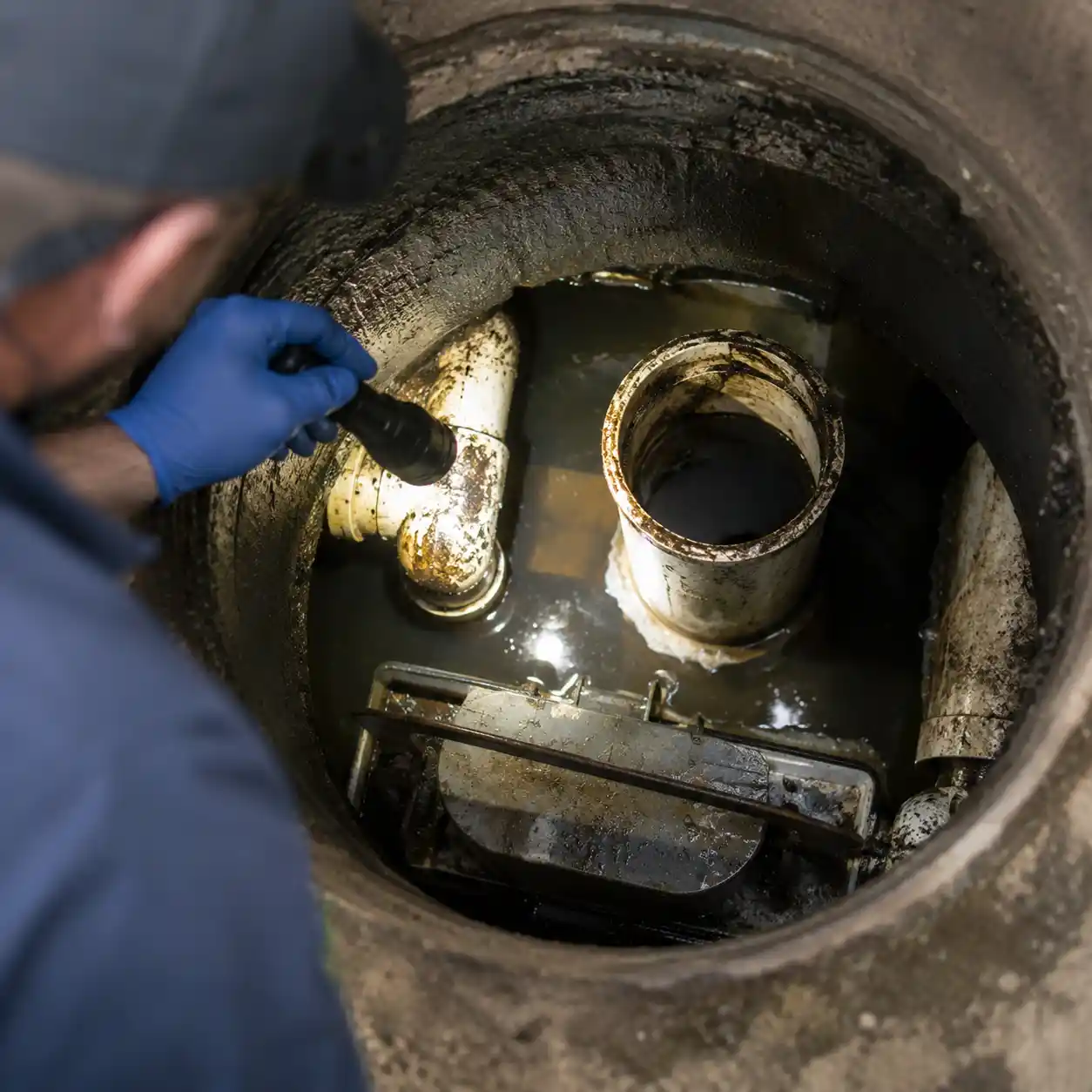
Septic Inspections
Buying a property with an older OWTS or a system you’re unsure about? A full inspection tells you exactly what condition the field and tank are actually in.
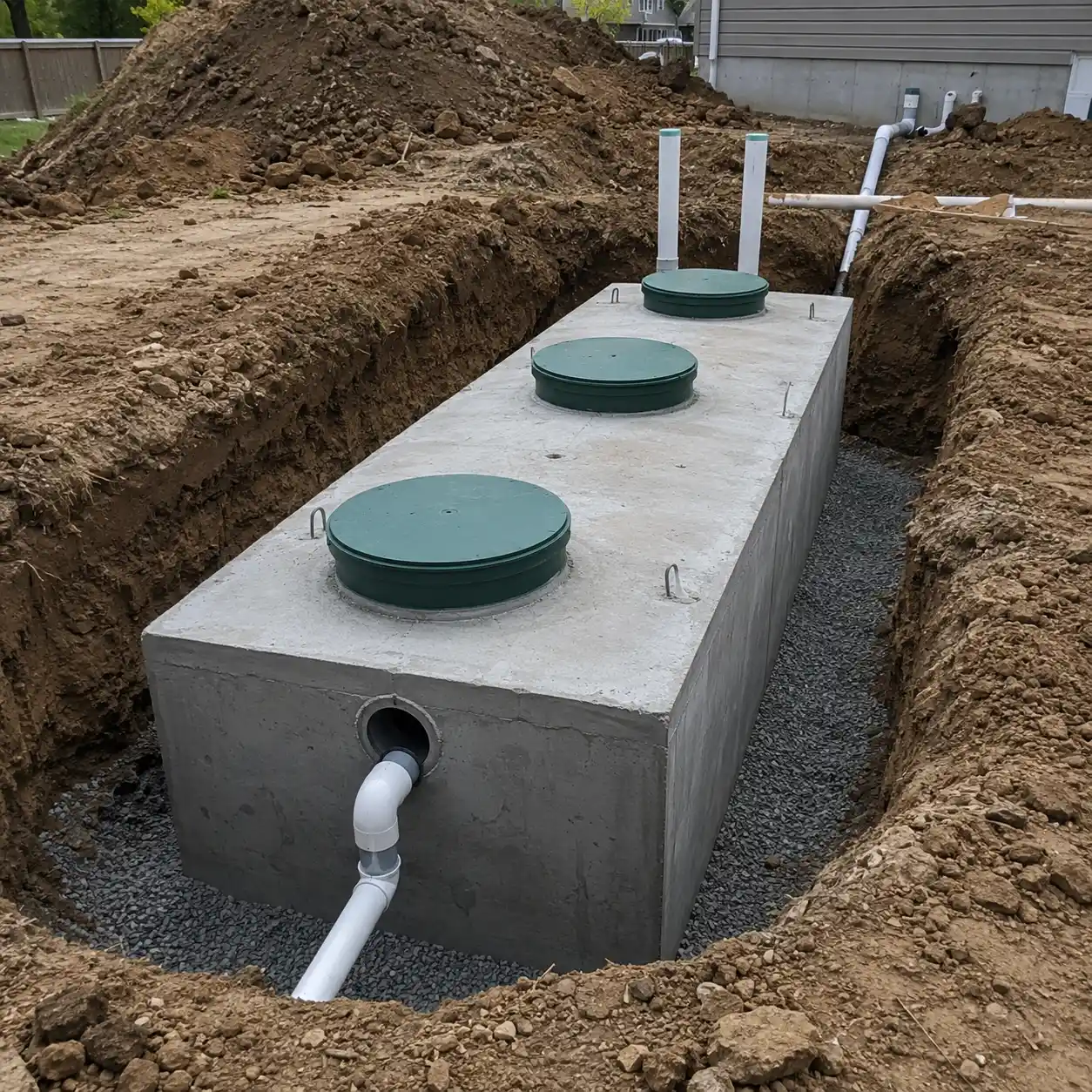
Septic System Installation
When a field has genuinely reached the end of its life — or you’re dealing with a cesspool that needs upgrading — we design and install a system built for your site’s actual conditions.
Schedule a Drain Field Evaluation in Providence County
Noticed wet ground, slow drains, or an odor near your field? Fill out the form and we’ll get out to take a look, tell you honestly what’s going on, and give you a clear quote before any repair work starts.
- On-site test pit evaluation
- Distribution box & lateral inspection
- Honest repair vs. replacement guidance
- RIDEM-compliant repair work
- Documentation filed on your behalf
- Serving all of Providence County
Tell Us About Your Needs
We’ll reach out to confirm your appointment details.